Travel Guide
UNESCO World Heritage Sites in Pakistan: Complete Guide to the Existing and New Tentative List
Pakistan currently has six properties inscribed on the UNESCO World Heritage List, all of them cultural sites. In addition, Pakistan's UNESCO Tentative List has expanded significantly and now contains 37 sites, including a number of important new additions submitted in 2026.
What Is a UNESCO World Heritage Site?
A UNESCO World Heritage Site is a place recognized for having Outstanding Universal Value to humanity. Such places may be cultural, natural or mixed properties and are considered important not only to the country where they are located, but to the world's shared heritage.
There is an important distinction between the World Heritage List and the Tentative List.
A site on the World Heritage List has already gone through the UNESCO nomination and evaluation process and has been formally inscribed.
A site on the Tentative List is different. It is a property that a country intends to consider for future nomination. Being on the Tentative List does not mean that UNESCO has already declared the site a World Heritage Site.
Pakistan's Six UNESCO World Heritage Sites
Pakistan currently has six UNESCO World Heritage properties:
- Archaeological Ruins at Moenjodaro
- Taxila
- Buddhist Ruins of Takht-i-Bahi and Neighbouring City Remains at Sahr-i-Bahlol
- Fort and Shalamar Gardens in Lahore
- Historical Monuments at Makli, Thatta
- Rohtas Fort
The first five were inscribed during the 1980–1981 period, while Rohtas Fort was added in 1997.
1. Archaeological Ruins at Moenjodaro
Location: Larkana District, Sindh
UNESCO inscription: 1980
Category: Cultural
Moenjodaro is one of the most important archaeological sites in South Asia and one of the defining remains of the ancient Indus Valley Civilization.
The ruins represent an exceptionally sophisticated urban settlement dating to the third millennium BC. UNESCO describes Moenjodaro as the best-preserved urban settlement in South Asia from this period and highlights its influence on the subsequent development of urbanization.
The ancient city demonstrates a remarkably advanced approach to urban planning. Archaeologists have uncovered streets arranged in an organized pattern, baked-brick buildings, wells, drainage systems, soak pits and public structures.
One of its most famous features is the Great Bath, generally regarded as one of the most remarkable public structures surviving from the Indus Civilization.
Moenjodaro also provides evidence of an organized economic, social and administrative system. The city was not simply a collection of houses; it was a planned urban centre with sophisticated infrastructure.
Only a portion of the archaeological area has been excavated, meaning that the site still contains considerable potential for archaeological research.
Why Moenjodaro matters
Moenjodaro provides a direct connection to one of the world's earliest urban civilizations. For visitors, it offers an opportunity to walk through the remains of a city that flourished roughly five millennia ago.
However, the site also faces serious conservation challenges, including salinity, groundwater-related problems, extreme weather and the risk of flooding.
2. Taxila
Location: Punjab, near Islamabad and Rawalpindi
UNESCO inscription: 1980
Category: Cultural
Taxila is not a single monument but a vast archaeological landscape containing settlements, monasteries, stupas and other remains representing different periods of South Asian history.
Its strategic location along ancient routes connecting the Indian subcontinent with Central Asia and the wider Silk Road helped Taxila develop into a major centre of commerce, learning and religion.
UNESCO's property includes evidence from several periods of urban development, including the settlements of Bhir, Sirkap and Sirsukh, as well as numerous Buddhist archaeological complexes.
The Taxila region also contains important Buddhist sites such as:
- Dharmarajika
- Jaulian
- Mohra Moradu
- Kalawan
- Giri
- Jandial
- Kunala
Taxila became particularly important as a centre of Gandharan Buddhism, attracting religious and cultural influences from South Asia, Central Asia and beyond.
The archaeological record demonstrates how the region's urban character changed over more than five centuries.
Taxila and Gandhara civilization
For travellers, Taxila is especially significant because it forms part of the broader Gandhara heritage landscape, which can also be explored through sites in Khyber Pakhtunkhwa.
Its proximity to Islamabad makes Taxila one of Pakistan's most accessible major archaeological destinations.
3. Buddhist Ruins of Takht-i-Bahi and Sahr-i-Bahlol
Location: Mardan District, Khyber Pakhtunkhwa
UNESCO inscription: 1980
Category: Cultural
The UNESCO property consists of two related archaeological components:
- The Buddhist monastery of Takht-i-Bahi
- The ancient fortified settlement of Sahr-i-Bahlol
Takht-i-Bahi was founded in the early first century AD and remained in use until approximately the seventh century. Its elevated location helped protect the monastery from many of the destructive events that affected settlements elsewhere.
The complex includes:
- A main stupa court
- Votive stupas
- Monastic cells
- Meditation areas
- A monastic quadrangle
- Assembly spaces
- Covered passages
- Other religious and secular structures
The neighbouring remains of Sahr-i-Bahlol represent a fortified settlement associated with the Kushan period.
Together, these sites provide important evidence for the development of Buddhist monastic and urban communities in ancient Gandhara.
Why Takht-i-Bahi is important
Takht-i-Bahi is particularly valuable because its architecture, location and archaeological remains provide a relatively complete picture of Buddhist monastic life in ancient Gandhara.
The site is also an important destination for visitors interested in the history of Buddhism in present-day Pakistan.
4. Fort and Shalamar Gardens in Lahore
Location: Lahore, Punjab
UNESCO inscription: 1981
Category: Cultural
The UNESCO property combines two major Mughal monuments:
Lahore Fort and Shalamar Gardens.
They are approximately seven kilometres apart and together represent the height of Mughal artistic and architectural achievement during the 16th and 17th centuries.
Lahore Fort contains a remarkable collection of Mughal structures associated particularly with the reigns of Akbar, Jahangir and Shah Jahan.
Among its architectural features are:
- Royal palaces
- Audience halls
- Mosques
- Decorative marble structures
- Pietra dura and inlay work
- Mosaic decoration
- Red sandstone construction
- Elaborate ornamental details
Shalamar Gardens, meanwhile, demonstrate the Mughal mastery of landscape architecture and water engineering.
The gardens were laid out during the reign of Shah Jahan in the 17th century and use terraces, fountains, water channels, pools and pavilions to create a carefully controlled garden landscape.
A masterpiece of Mughal architecture
The combination of monumental architecture at Lahore Fort and landscape design at Shalamar Gardens makes this UNESCO property particularly distinctive.
It represents not just individual buildings but the wider artistic culture of the Mughal Empire.
5. Historical Monuments at Makli, Thatta
Location: Thatta, Sindh
UNESCO inscription: 1981
Category: Cultural
Makli is one of the world's great historic necropolises.
Spread across approximately 10 square kilometres, the Makli archaeological landscape contains an enormous collection of tombs and graves associated with rulers, nobles, religious figures, scholars and other important personalities. UNESCO describes the necropolis as containing hundreds of thousands of tombs and graves.
The monuments represent the cultural development of Sindh between the 14th and 18th centuries.
One of the most fascinating aspects of Makli is the architectural diversity found within the necropolis. Local traditions interacted with influences from:
- Islamic architecture
- Persian traditions
- Mughal architecture
- Regional Hindu architectural traditions
- Central and wider Asian artistic traditions
Among the important monuments are the tombs associated with Jam Nizamuddin II, Isa Khan Tarkhan and other prominent historical figures.
The nearby historic city of Thatta further strengthens the cultural significance of the area.
Why Makli should be on every heritage itinerary
Makli is not simply a cemetery. It is a vast historical record carved into stone and brick.
Walking through the site reveals changing architectural styles, political history and the evolution of Sindhi culture across several centuries.
The site nevertheless faces significant conservation challenges, including weathering, salt-laden winds, humidity, rain, encroachment and vandalism.
6. Rohtas Fort
Location: Near Dina, Punjab
UNESCO inscription: 1997
Category: Cultural
Rohtas Fort is one of the most impressive examples of early Muslim military architecture in South Asia.
The fort was constructed in the 16th century under Sher Shah Suri and occupies a strategically important location.
UNESCO describes its massive defensive system as extending for more than four kilometres, with 68 bastions and 12 monumental gateways.
The fort was designed primarily for military purposes rather than royal luxury.
Its enormous walls, defensive towers and monumental gateways demonstrate the importance of military engineering during a period of political competition in the Indian subcontinent.
The fort's location also allowed it to control important routes between northern Punjab and the surrounding regions.
Rohtas Fort for travellers
Rohtas is one of Pakistan's best destinations for visitors interested in medieval military architecture.
Its scale becomes especially apparent when exploring the perimeter walls, gateways and elevated sections of the fort.
Pakistan's UNESCO Tentative List
Pakistan's Tentative List has expanded considerably over the years.
As of 2026, UNESCO records 37 properties on Pakistan's Tentative List. These include archaeological sites, historic forts, religious monuments, cultural landscapes, national parks and traditional cultural environments.
The list is important because it identifies places Pakistan may seek to nominate for future World Heritage inscription.
The 12 New Additions to Pakistan's UNESCO Tentative List in 2026
A particularly important development occurred in 2026, when Pakistan submitted 12 additional properties to the Tentative List.
These additions significantly broaden the geographical and thematic representation of Pakistan's heritage.
The new 2026 additions are:
- Kalasha Valley Cultural Landscape
- Kot Diji Fort
- Naukot Fort
- Umerkot Fort
- Tomb of Sultan Muqarrab Khan
- Rewat Fort
- Mai Qamro Mosque
- Pharwala Fort
- Bazira-Barikot
- Archaeological Complex of Gor Khatri
- Sethi House
- Bhamala Buddhist Complex
UNESCO records these submissions in March and May 2026.
1. Kalasha Valley Cultural Landscape
Location: Chitral, Khyber Pakhtunkhwa
Submitted: 2026
Category: Cultural
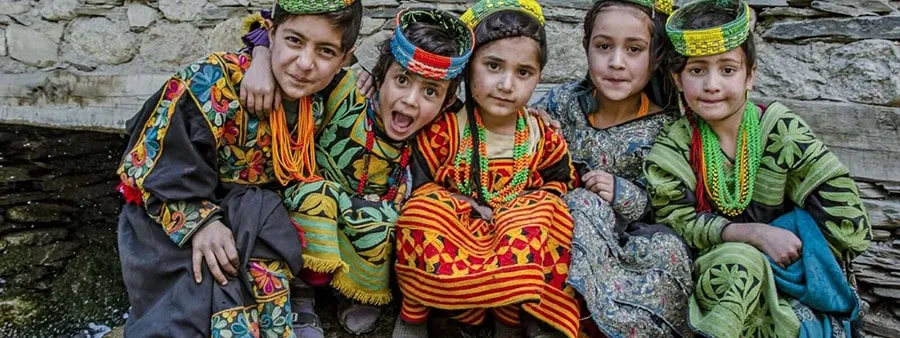
The Kalasha Valley Cultural Landscape represents a living cultural environment rather than a collection of ruins.
The proposed property covers the three principal Kalasha valleys:
- Bumburet
- Rumbur
- Birir
UNESCO describes the landscape as a continuously inhabited high-mountain cultural environment in the Hindu Kush where settlement patterns, traditional beliefs, community life and the natural environment have developed together over centuries.
This is particularly significant because the heritage value is not restricted to individual buildings.
The landscape itself, traditional settlements, cultural practices and relationship with the surrounding mountains form part of the proposed heritage.
Tourism significance
The Kalasha valleys could become one of Pakistan's most important examples of living cultural heritage tourism, provided that future tourism development respects the community, environment and cultural traditions.
2. Kot Diji Fort
Location: Sindh
Submitted: 2026
Kot Diji Fort represents another important chapter in the archaeological and architectural history of Sindh.
Its inclusion on the Tentative List strengthens the representation of Sindh's fortified heritage alongside already recognized properties such as Moenjodaro and Makli.
The fort also sits within a wider archaeological landscape associated with the ancient civilizations of the region.
3. Naukot Fort
Location: Sindh
Submitted: 2026
Naukot Fort is an important example of historic fortification in the southeastern part of Sindh.
Its location is particularly significant because it lies in a region historically connected with routes through the Thar Desert and surrounding areas.
Its addition demonstrates that Pakistan's heritage strategy is expanding beyond the country's best-known monuments.
4. Umerkot Fort
Location: Umerkot, Sindh
Submitted: 2026
Umerkot Fort is closely associated with the political and cultural history of Sindh.
The fort is particularly well known for its association with Mughal history and Emperor Akbar, who was born in the wider Umerkot region.
Its inclusion on the Tentative List gives greater international visibility to an important site in Sindh's medieval and early modern history.
5. Tomb of Sultan Muqarrab Khan
Location: Pakistan
Submitted: 2026
The Tomb of Sultan Muqarrab Khan is one of the new heritage properties submitted by Pakistan in May 2026.
Its inclusion contributes to the representation of historic funerary architecture within the country's Tentative List.
6. Rewat Fort
Location: Punjab
Submitted: 2026
Rewat Fort is an important historic fortification located along the historic routes west of Islamabad.
The fort reflects the strategic importance of the Potohar region, which has historically connected northern Punjab with routes towards the northwest.
Its location makes it particularly interesting for heritage itineraries combining Islamabad, Taxila, Potohar and other archaeological destinations.
7. Mai Qamro Mosque
Location: Pakistan
Submitted: 2026
Mai Qamro Mosque is another 2026 addition to Pakistan's Tentative List.
Its inclusion demonstrates UNESCO's broader consideration of Pakistan's historic religious architecture beyond the major Mughal monuments that are already internationally recognized.
8. Pharwala Fort
Location: Potohar region, Punjab
Submitted: 2026
Pharwala Fort is associated with the historic landscape of the Potohar Plateau.
The region contains some of the most important archaeological and historic routes in northern Punjab.
Together with sites such as Taxila and Rewat Fort, Pharwala helps demonstrate the strategic importance of the Potohar region throughout different periods of history.
9. Bazira-Barikot
Location: Barikot, Swat, Khyber Pakhtunkhwa
Submitted: 2026
Bazira-Barikot is an important archaeological site in the Swat Valley.
UNESCO identifies it as a cultural property submitted under criteria (ii), (iii) and (iv). The proposed property is located on the left bank of the Swat River in central Swat.
The archaeological significance of Barikot is closely connected with the ancient civilizations and cultural exchanges that shaped the Swat Valley.
Its inclusion could further strengthen Pakistan's representation of the ancient Gandhara and Swat archaeological landscapes.
10. Archaeological Complex of Gor Khatri
Location: Peshawar, Khyber Pakhtunkhwa
Submitted: 2026
Gor Khatri occupies a remarkable position in the historic heart of Peshawar.
UNESCO's tentative nomination identifies it under criteria (iii) and (iv).
The site is particularly important because Peshawar has been a crossroads of civilizations for centuries.
Gor Khatri represents layers of historical development within one of South Asia's major historic urban centres.
Its future recognition would provide international attention to Peshawar's archaeological and urban heritage.
11. Sethi House
Location: Peshawar, Khyber Pakhtunkhwa
Submitted: 2026
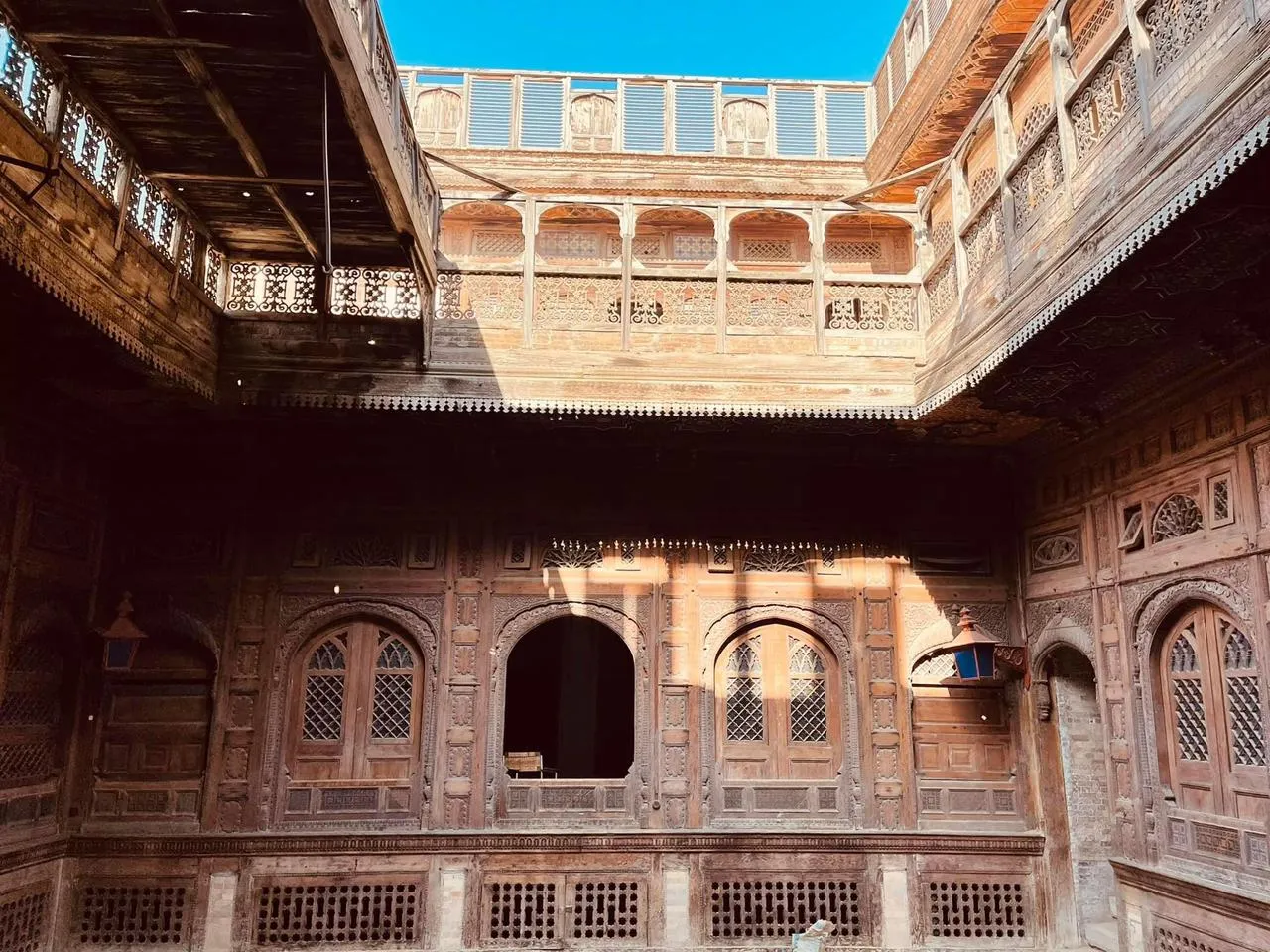
Sethi House represents the architectural heritage of historic Peshawar.
Unlike ancient archaeological sites, its importance is closely connected with the city's historic urban culture and traditional architecture.
Its addition to the Tentative List helps broaden Pakistan's heritage portfolio from monumental archaeology to historic residential architecture.
12. Bhamala Buddhist Complex
Location: Khyber Pakhtunkhwa
Submitted: 2026
Bhamala Buddhist Complex represents another important chapter in the Buddhist heritage of the Gandhara region.
Its inclusion is particularly significant because Pakistan possesses a large concentration of Buddhist archaeological remains, many of which are located in Khyber Pakhtunkhwa.
The addition of Bhamala alongside Bazira-Barikot and Gor Khatri strengthens the representation of Khyber Pakhtunkhwa's archaeological heritage on Pakistan's Tentative List.
Other Sites on Pakistan's UNESCO Tentative List
The 2026 additions are only part of the story. Pakistan already had numerous important properties on its Tentative List.
These include:
Ancient Archaeological Sites
- Archaeological Site of Mehrgarh
- Archaeological Site of Rehman Dheri
- Archaeological Site of Harappa
- Archaeological Site of Ranigat
- Shahbazgarhi Rock Edicts
- Mansehra Rock Edicts
- Port of Banbhore
Historic Islamic and Mughal Heritage
- Badshahi Mosque, Lahore
- Wazir Khan's Mosque, Lahore
- Tombs of Jahangir, Asif Khan and Akbari Sarai
- Shah Jahan Mosque, Thatta
- Tomb of Shah Rukn-e-Alam
- Tomb of Bibi Jawindi, Baha'al-Halim and Ustead, and the Tomb and Mosque of Jalaluddin Bukhari
Forts and Historic Architecture
- Rani Kot Fort
- Baltit Fort
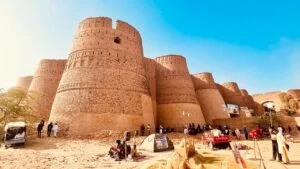
- Derawar and the Desert Forts of Cholistan
- Hiran Minar and Tank
- Chaukhandi Tombs
- Kot Diji Fort
- Naukot Fort
- Umerkot Fort
- Rewat Fort
- Pharwala Fort
Natural and Cultural Landscapes
- Hingol Cultural Landscape
- Karez System Cultural Landscape
- Nagarparkar Cultural Landscape
- Central Karakoram National Park
- Deosai National Park
- Ziarat Juniper Forest
- The Salt Range and Khewra Salt Mine
- Kalasha Valley Cultural Landscape
UNESCO's current Pakistan Tentative List contains 37 properties in total.
Pakistan's Heritage Regions: A Useful Way to Understand the List
Pakistan's UNESCO heritage can be understood geographically.
Sindh
Sindh contains some of Pakistan's most important ancient and medieval heritage:
- Moenjodaro
- Makli
- Thatta
- Banbhore
- Kot Diji
- Umerkot
- Naukot
- Nagarparkar
This makes Sindh particularly important for archaeological and heritage tourism.
Punjab
Punjab has a strong concentration of Mughal, medieval and military heritage:
- Lahore Fort
- Shalamar Gardens
- Rohtas Fort
- Harappa
- Taxila
- Hiran Minar
- Rewat Fort
- Pharwala Fort
- Salt Range
Khyber Pakhtunkhwa
Khyber Pakhtunkhwa is particularly important for Gandharan and Buddhist heritage:
- Takht-i-Bahi
- Sahr-i-Bahlol
- Taxila's wider archaeological landscape
- Ranigat
- Bhamala
- Bazira-Barikot
- Gor Khatri
- Kalasha Valley
Balochistan
Balochistan contains a combination of archaeological, cultural and natural heritage:
- Mehrgarh
- Hingol Cultural Landscape
- Karez System Cultural Landscape
- Ziarat Juniper Forest
Gilgit-Baltistan
The mountainous north contains important cultural landscapes and historic architecture, including:
- Baltit Fort
- Central Karakoram National Park
The region's heritage is particularly interesting because historic settlements, mountain environments and ancient travel routes are closely interconnected.
Why Pakistan Has So Much UNESCO Potential
Pakistan's heritage significance comes from its geographical position.
For thousands of years, the territory of present-day Pakistan has been a meeting point between South Asia, Central Asia, Iran, Afghanistan and China.
Ancient trade routes passed through these mountains, valleys and plains. Armies moved through the same corridors. Religions spread along these routes. Merchants established settlements, while different civilizations influenced architecture, art, language and cultural traditions.
This explains why Pakistan's heritage is so diverse.
A traveller can encounter:
Indus Valley urbanism → Gandharan Buddhism → Hindu and Buddhist archaeological traditions → Islamic architecture → Mughal architecture → Sikh and colonial heritage → living mountain cultures
within a single country.
UNESCO Heritage and Tourism in Pakistan
The growing UNESCO Tentative List creates a major opportunity for Pakistan's tourism industry.
Heritage tourism can encourage visitors to stay longer and travel beyond the country's most established destinations.
For example, an international visitor arriving in Islamabad could combine:
Islamabad → Taxila → Rewat → Pharwala → Rohtas Fort
A northern heritage journey could combine:
Peshawar → Gor Khatri → Takht-i-Bahi → Bhamala → Swat → Bazira-Barikot → Kalasha Valleys
A Sindh heritage circuit could include:
Karachi → Chaukhandi Tombs → Banbhore → Thatta → Makli → Kot Diji → Umerkot → Naukot → Nagarparkar
Such circuits would connect individual monuments into larger historical narratives rather than treating each site as an isolated attraction.
The Difference Between "UNESCO Site" and "UNESCO Tentative Site"
This distinction is important for tourism businesses and travellers.
If a property is on the UNESCO World Heritage List, it has been formally inscribed by the World Heritage Committee.
If it appears on the Tentative List, it is a potential future nomination.
Therefore, it would be incorrect to advertise Kot Diji Fort, Kalasha Valley or Gor Khatri as a "UNESCO World Heritage Site" simply because they are on the Tentative List.
A more accurate description would be:
"Pakistan's UNESCO Tentative List site"
or
"A property included on Pakistan's UNESCO Tentative List."
This distinction is especially important for travel websites, tour operators, journalists and tourism marketing material.
What Could Pakistan's Future UNESCO Portfolio Look Like?
Pakistan already has six World Heritage properties, but its Tentative List demonstrates that the country has considerably more heritage of potential international significance.
The 2026 additions are particularly interesting because they introduce a wider range of heritage types:
- Living cultural landscapes
- Buddhist archaeological sites
- Historic urban environments
- Traditional houses
- Islamic monuments
- Fortifications
- Archaeological complexes
The Kalasha Valley Cultural Landscape is especially distinctive because it represents living cultural heritage rather than only archaeological remains.
Meanwhile, Bazira-Barikot, Gor Khatri and Bhamala reinforce Pakistan's growing representation of Gandharan and Buddhist heritage.
Conservation: The Challenge Behind Recognition
UNESCO recognition brings prestige, but inscription alone does not guarantee preservation.
Several Pakistani heritage properties face challenges involving:
- Urban expansion
- Environmental degradation
- Weathering
- Flooding
- Salinity
- Illegal excavation
- Encroachment
- Insufficient conservation funding
- Poor visitor management
- Infrastructure pressure
UNESCO's conservation documentation for properties such as Moenjodaro, Takht-i-Bahi, Lahore Fort and Makli repeatedly identifies the need for sustained conservation and management.
This means Pakistan's next major challenge is not simply obtaining more UNESCO inscriptions. It is ensuring that existing and future heritage properties are properly conserved, documented and managed.